

Scaling impact: moving behavioural insights from trial to transformation.
By Joseph Ssentongo, CEO
Feb 13, 2026
Last week at the World Government Summit in the UAE, I had the privilege of joining a panel convened by the Behavioral Science Group (BSG) for the Global Behavioral Evidence Network for Development (GBEND).
Our conversation centered on a question that sits at the heart of our work at the Global Innovation Fund (GIF): How can behavioural insights move from "interesting experiments" to the backbone of global development?
At GIF, we’ve seen firsthand that a behavioural lens doesn't just improve a project, it can fundamentally change the trajectory of an innovation. It helps shift focus from isolated wins to systemic redesign, building models for national scale and long-term resilience. Here are my three main takeaways from our discussion on how we bridge the gap between insight and widespread adoption and scale.
1. The "big bets": systematic changes over quick fixes
From GIF's perspective, the biggest opportunities for behavioural insights in international development don’t revolve around a specific nudge or a single sector per se. The biggest bets are:
- Building internal capability: We need to build behavioural focus and knowledge inside government systems. The goal is to ensure that the next policy, crisis response, or service redesign is built around how people actually decide and act, rather than how we assume they will.
- Integrating into systems: We should focus on layering behavioural interventions onto programmes that already have massive reach, such as cash transfers, immunisation drives, and education systems. In an era of tightening aid budgets, light-touch design changes allow us to shift population-level outcomes without expanding bureaucracy or cost.
2. Evidence in action: three models of integration
Over time, one insight has become clear: behavioural science is the mechanism, but scale has to be achieved through institutions. Here are three examples from GIF’s portfolio that illustrate this:
Strengthening public systems
We partnered with the Behavioural Insights Team to work with government partners in various LMICs including Indonesia, Bangladesh, and Guatemala to build the muscle for “test, learn, scale” inside public agencies. The work initiated dozens of trials, and importantly, some results were taken to scale. In Indonesia, for example, one campaign on early tax filing was expanded to reach 11 million taxpayers.
Enhancing social protection
Ideas42 integrates behavioural science into cash transfer programmes across multiple countries. The design features are intentionally light-touch, including goal setting, plan making, and reminders, so they can be layered onto existing social protection without redesigning the whole programme.The evidence consistently finds positive impacts on productive inclusion outcomes at a low cost, often less than $5 per person. Analysis suggests these behavioural components were around 1.5 times more effective at increasing savings than simply giving the equivalent cash amount. Those results helped secure a government commitment to scale to 500,000 households in Tanzania’s safety net programme.
Shifting social norms
In India, we supported Breakthrough's school-based gender curriculum for adolescents. A randomised controlled trial in Haryana found improvements in gender attitudes and positive changes in boys’ behaviour. The programme has since been rolled out across all 6,000+ public schools in Punjab and over 21,000 schools in Odisha, reaching over 3 million adolescents, with government co-funding and integration into teacher training and official curricula.
3. Aligning incentives with impact
We must acknowledge a hard truth: funding structures have behavioural effects of their own. If you fund the research, you are shaping what gets studied, what gets learned, and ultimately, what has a chance to scale.
Currently, many funding models reward speed, novelty, and narrow outcomes. This creates a systemic bias toward short-term pilots that look promising in a controlled environment but struggle when they encounter real institutions. To move beyond the pilot, we need to rethink how we approach two critical factors:
- Valuing practical learning: a funder's role is not just to finance evidence, but to underwrite learning and decision-making. This means prioritising evidence that helps answer practical questions about delivery, cost, political feasibility, and institutional fit, not just whether a statistical effect exists.
- The courage to de-risk failure: in many systems, the downside of a”failed experiment” is immediate, while the upside of learning is diffuse and delayed. If funders do not share that risk, experimentation rationally disappears. We must create a culture where sharing what hasn’t worked is viewed as a high-value contribution.
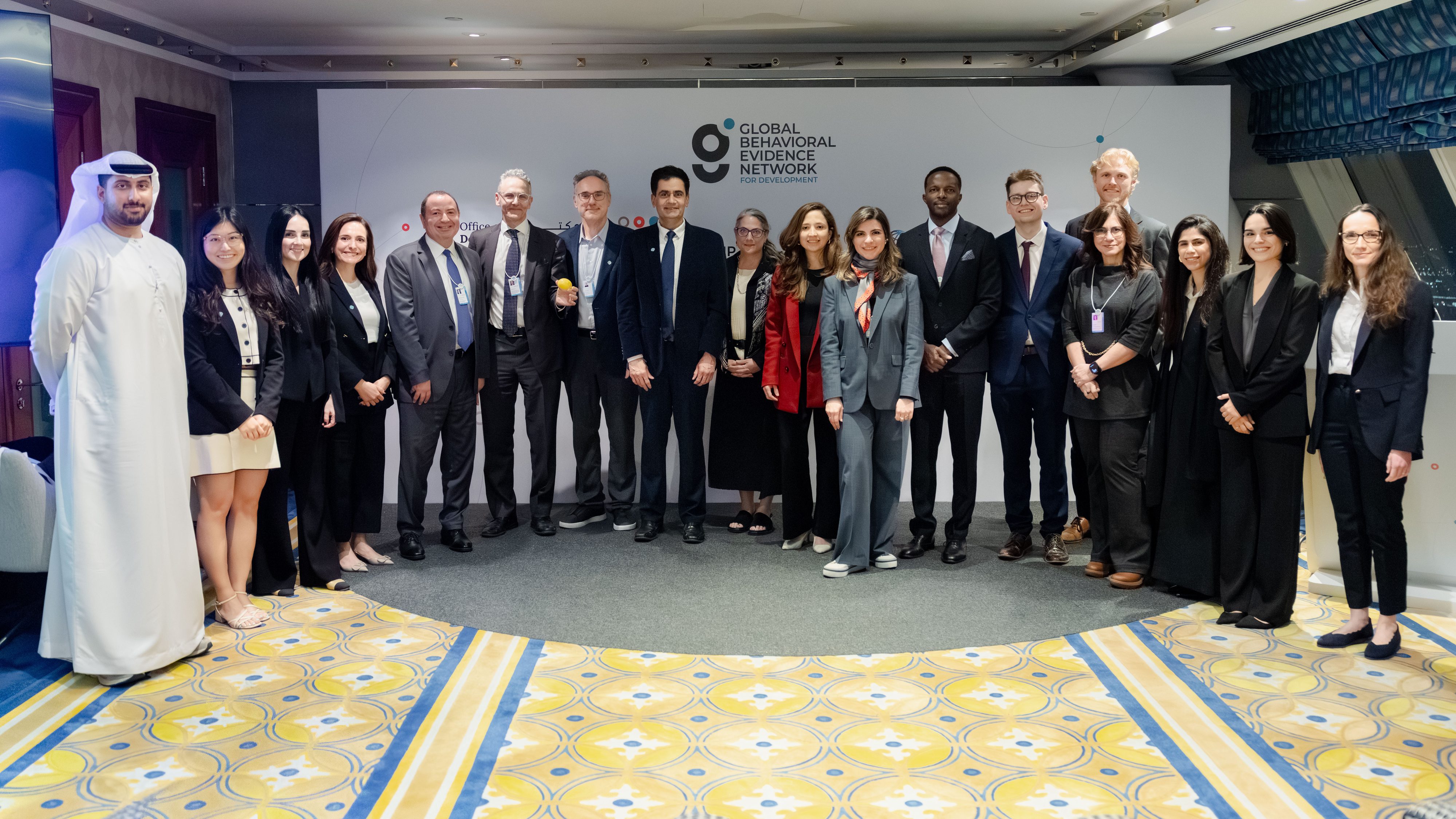
When incentives, behavioural insight, and capital align, governments gain the confidence to act. The shift from experiments to durable public policy is rarely linear and takes time. But by funding for scale from day one, we ensure that behavioural science isn’t just an interesting addition, but is the foundation of success.