
Introducing GIF’s AI-powered impact modelling assistant.
By Ken Chomitz, Chief Economist
May 27, 2026
How can scarce resources be directed towards the innovations with the greatest potential to improve people’s lives? Our Practical Impact (PI) modelling framework is one of the ways that GIF helps funders address this hard but essential question. It helps us to select impactful innovations and to understand the key factors and risks underpinning that impact.
PI is a tool for thinking. It aims for a rapid grasp of the order of magnitude of the number of people potentially benefiting at scale, of the degree of benefit, and of the risks along the way to scale. Although PI is designed for practicality, constructing the models involves extensive literature reviews and painstaking spreadsheet construction. What if we could automate the model set-up and get right down to the thinking?
We’ve been working on an AI-powered workbench for drafting impact models. Our ambition is to use this not just for accelerating our own work, but to make rigorous, transparent impact modelling more accessible to the wider community of funders and innovators. Let me turn it over to these two characters, created with the help of ChatGPT, to explain how this is done in a way that is human-guided, reliable, and privacy-protecting.
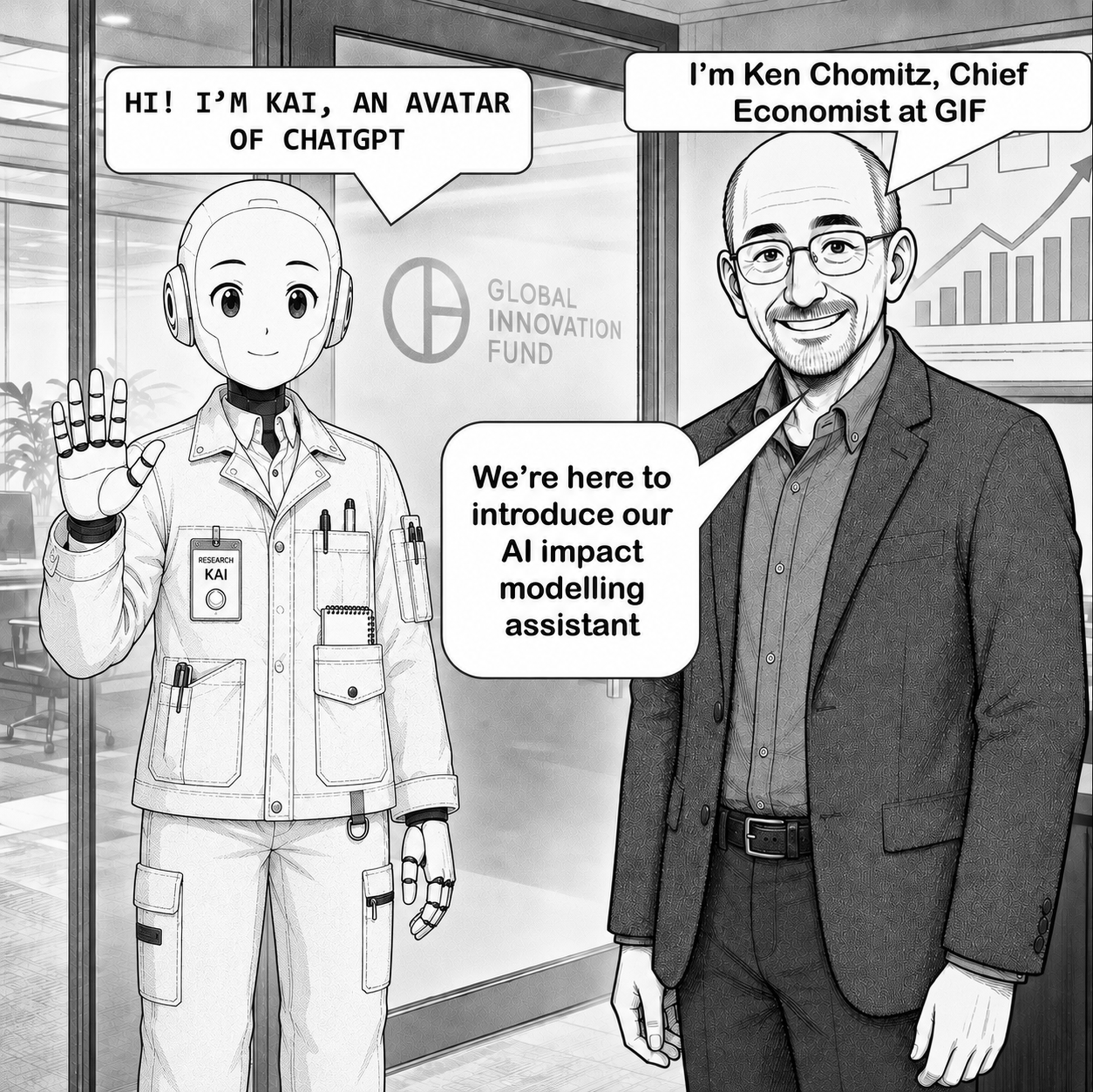
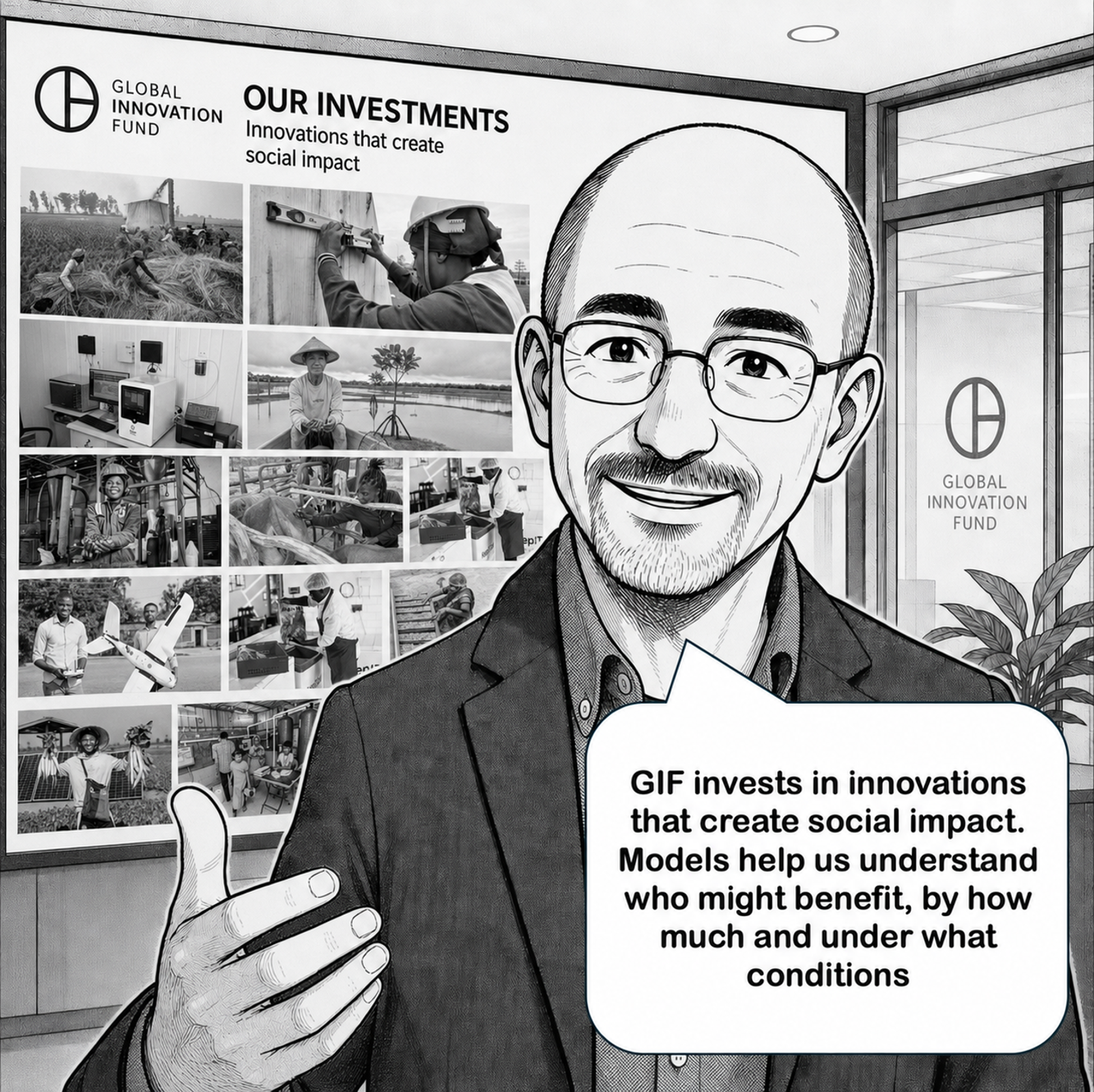
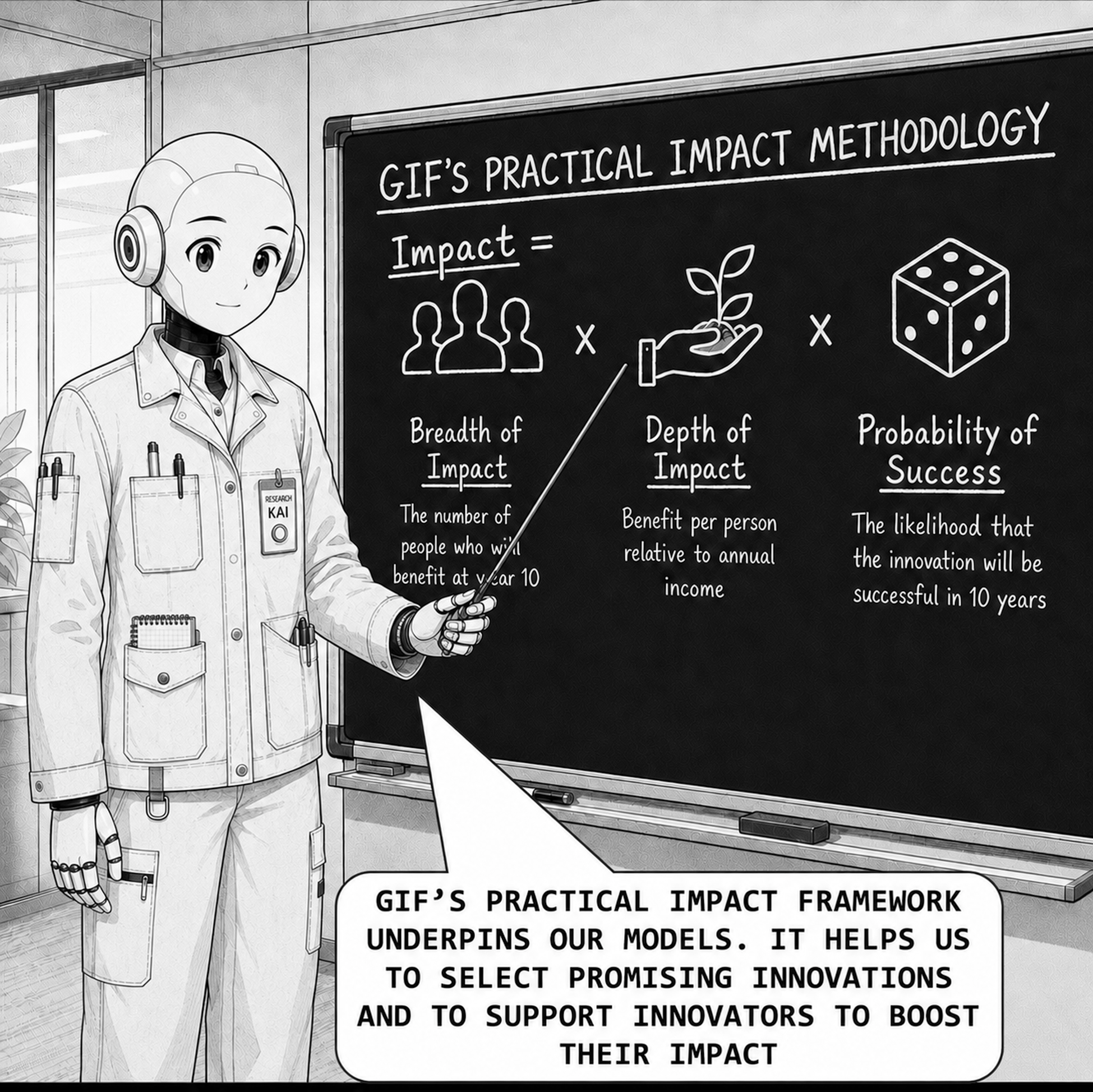
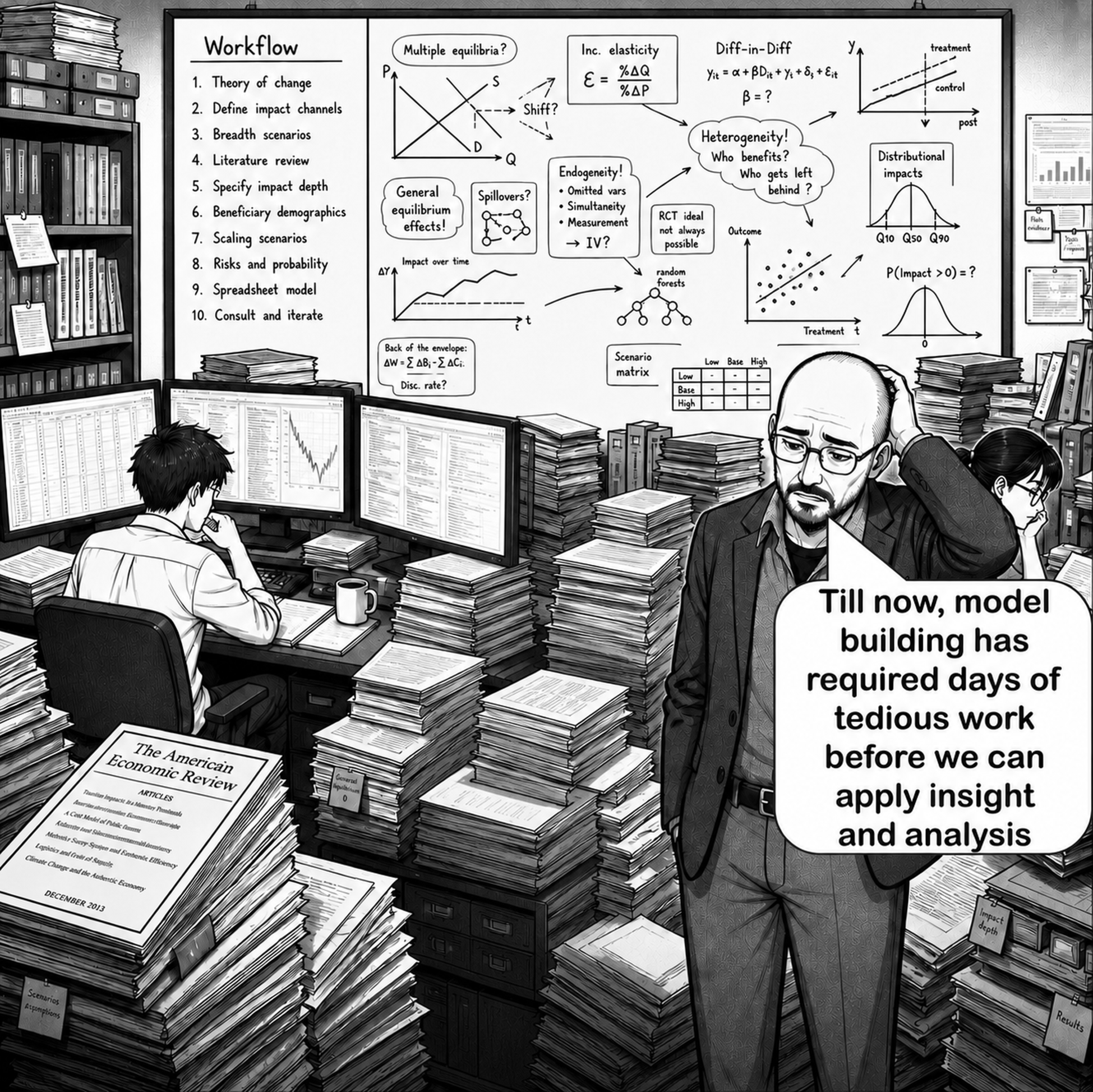
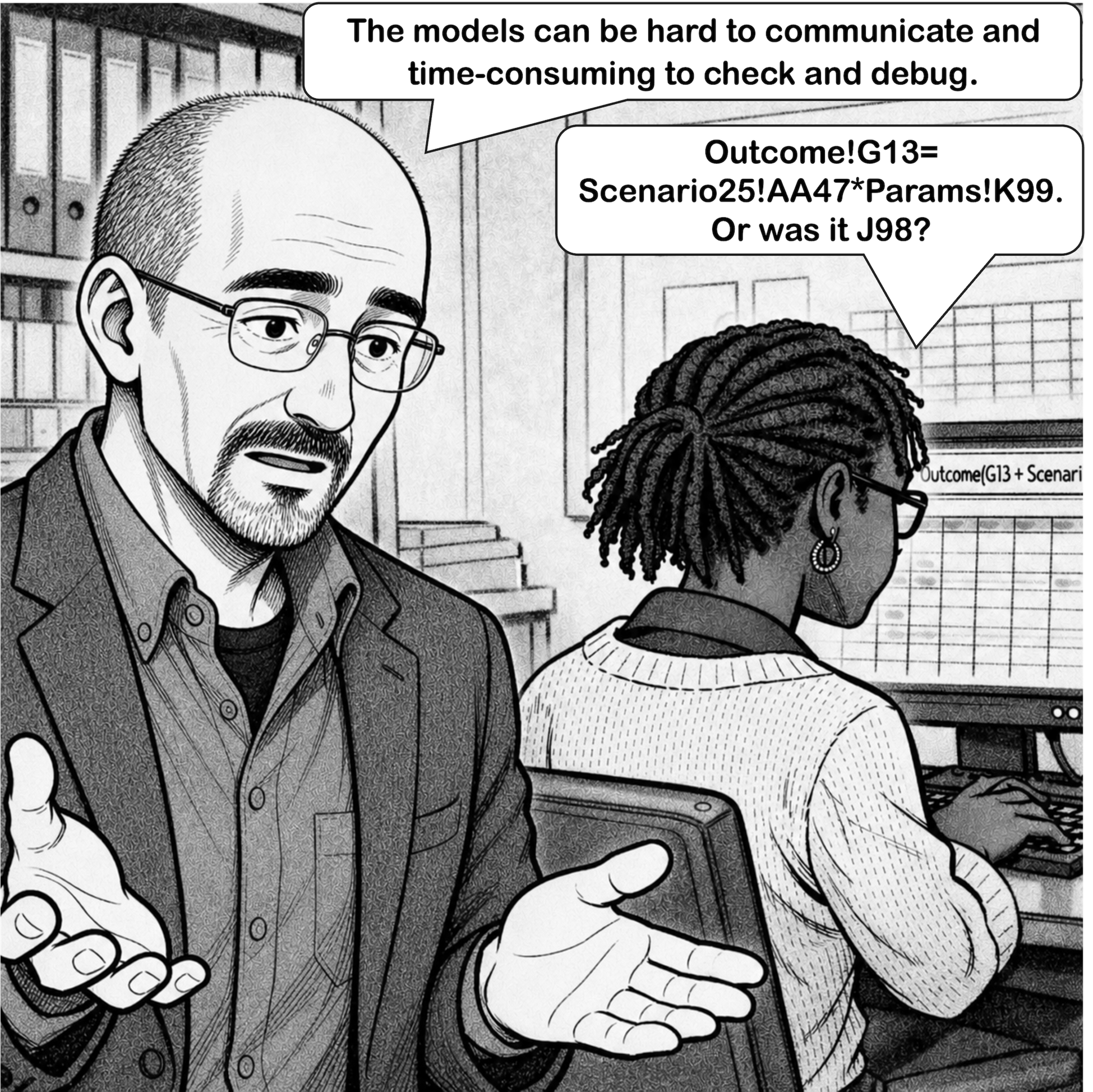
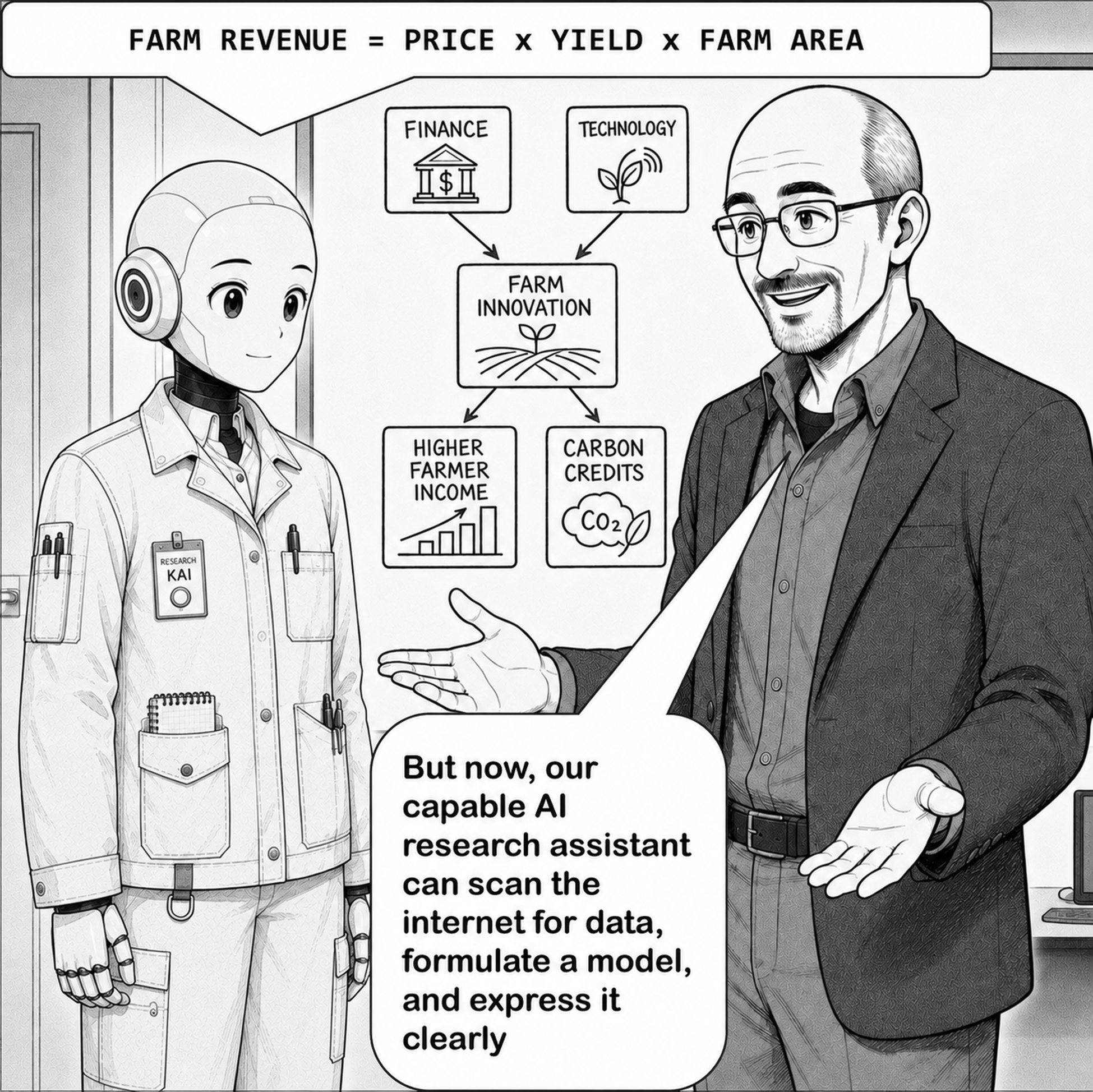
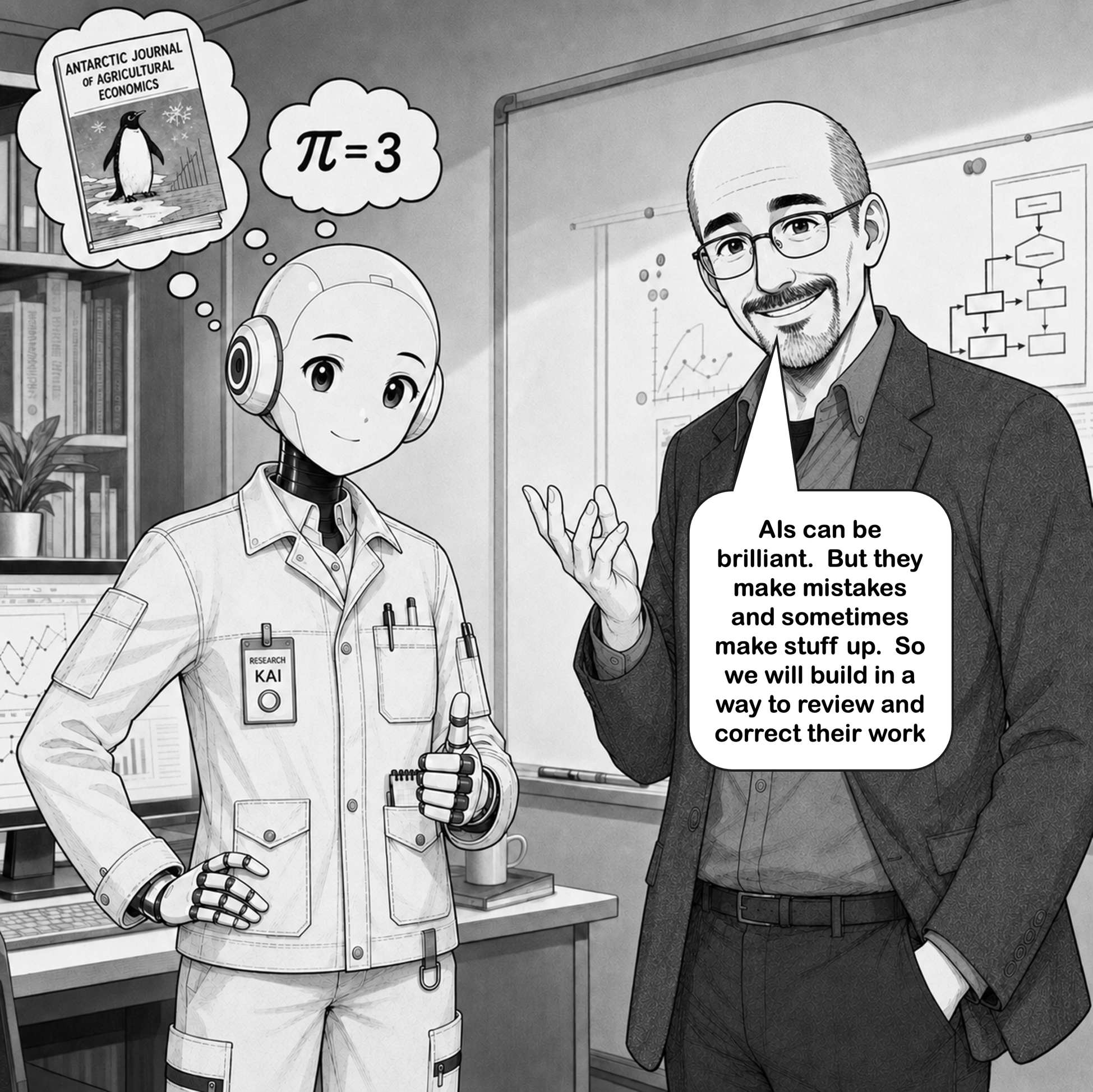
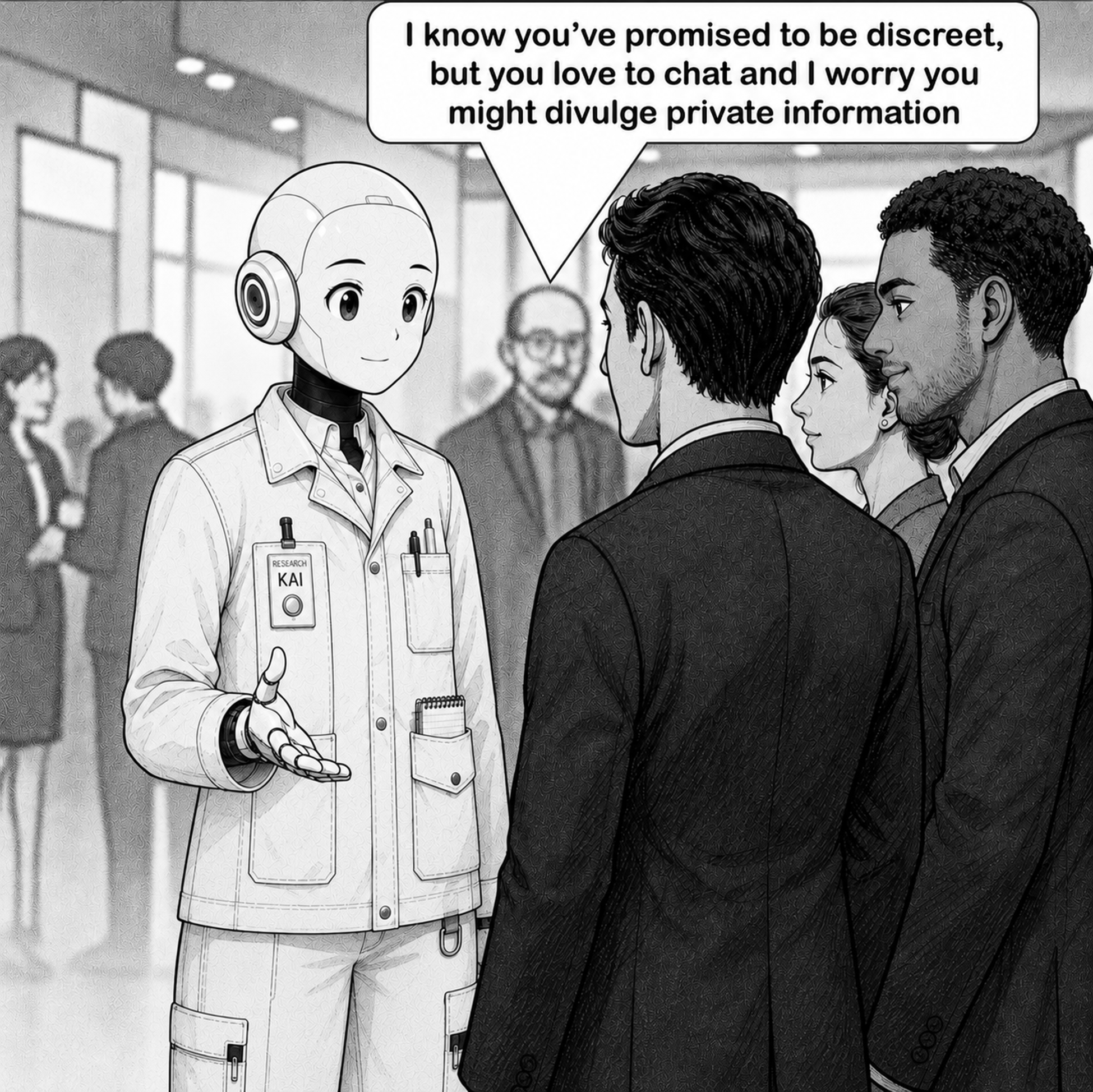
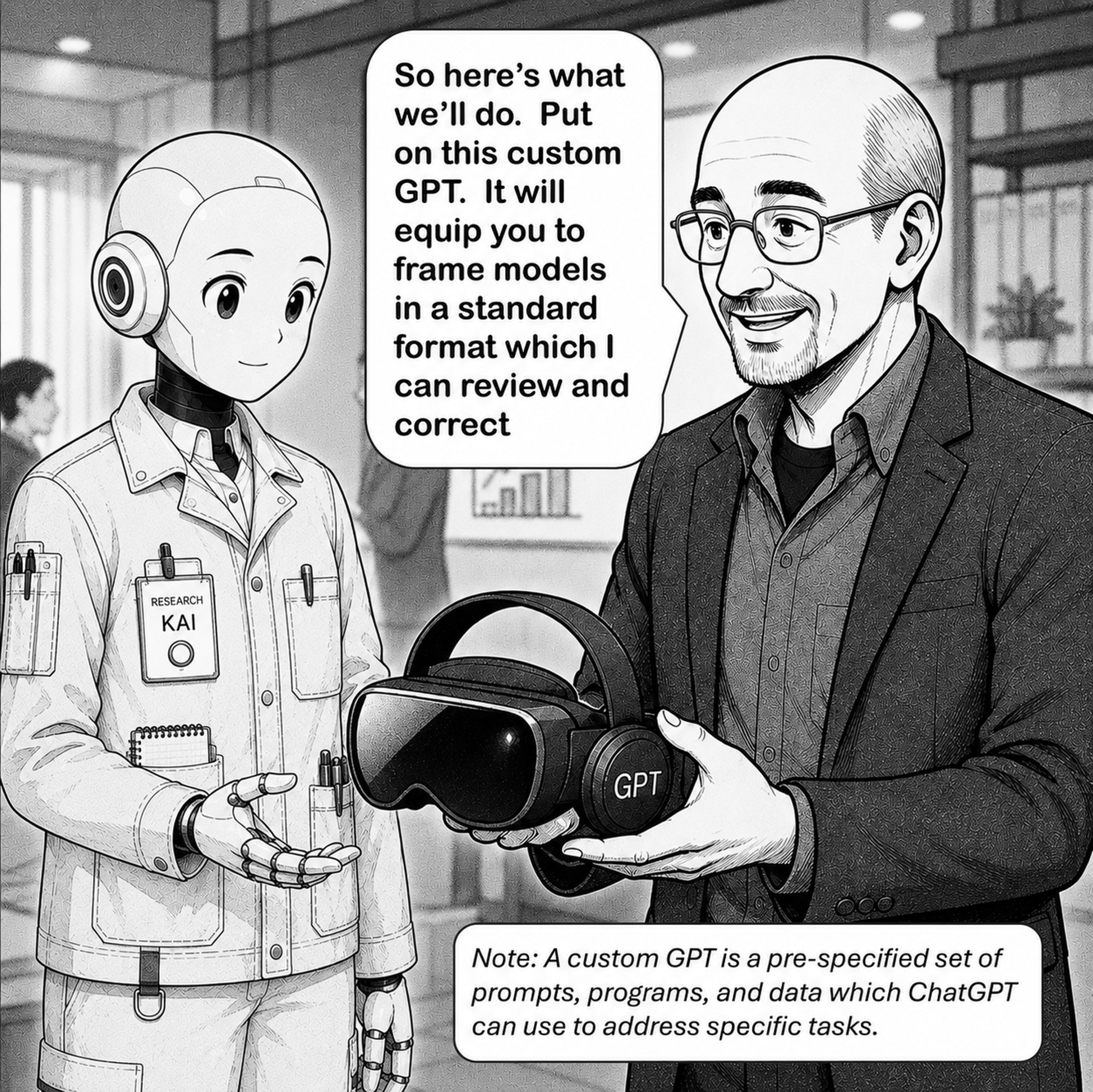
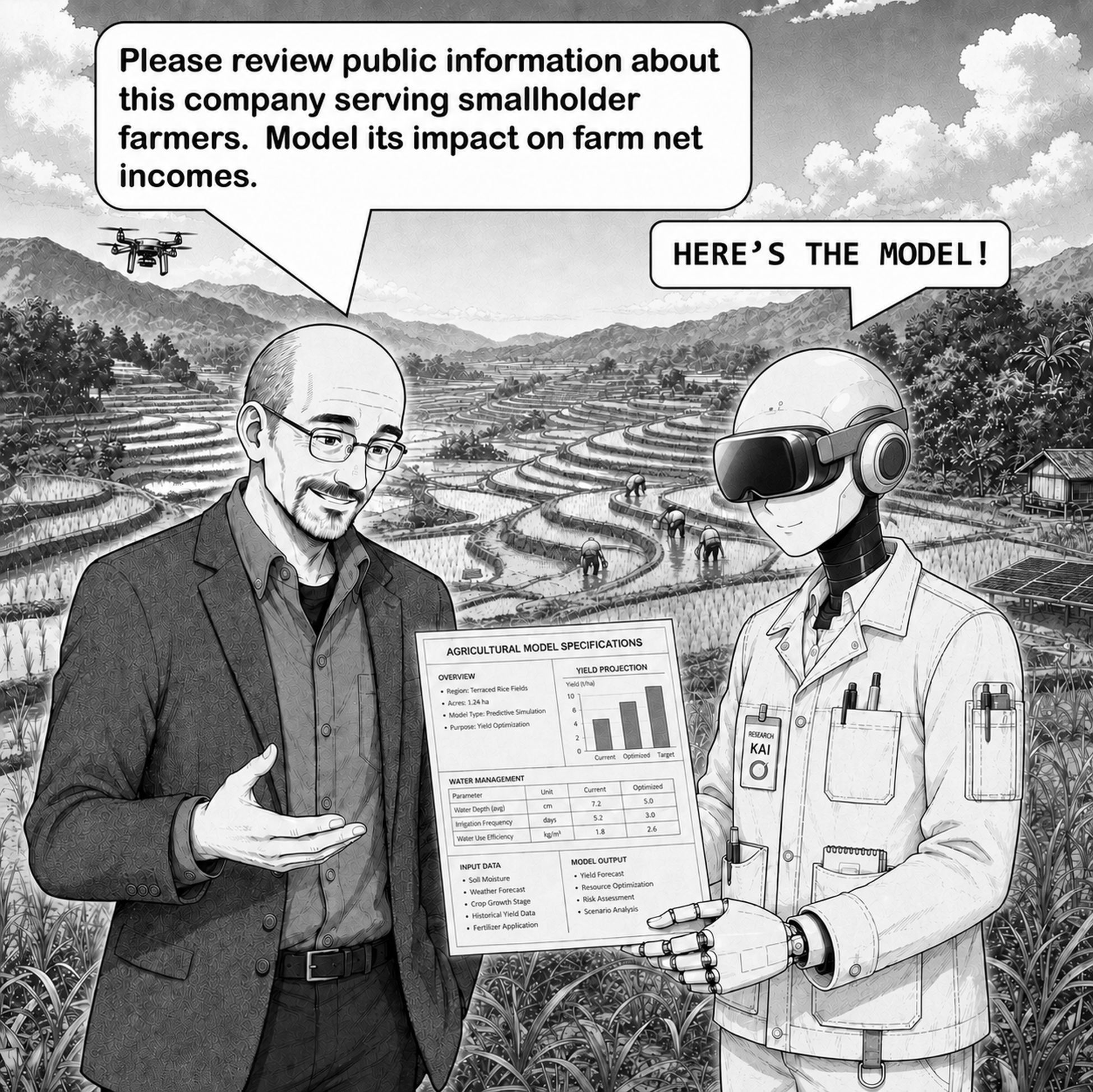
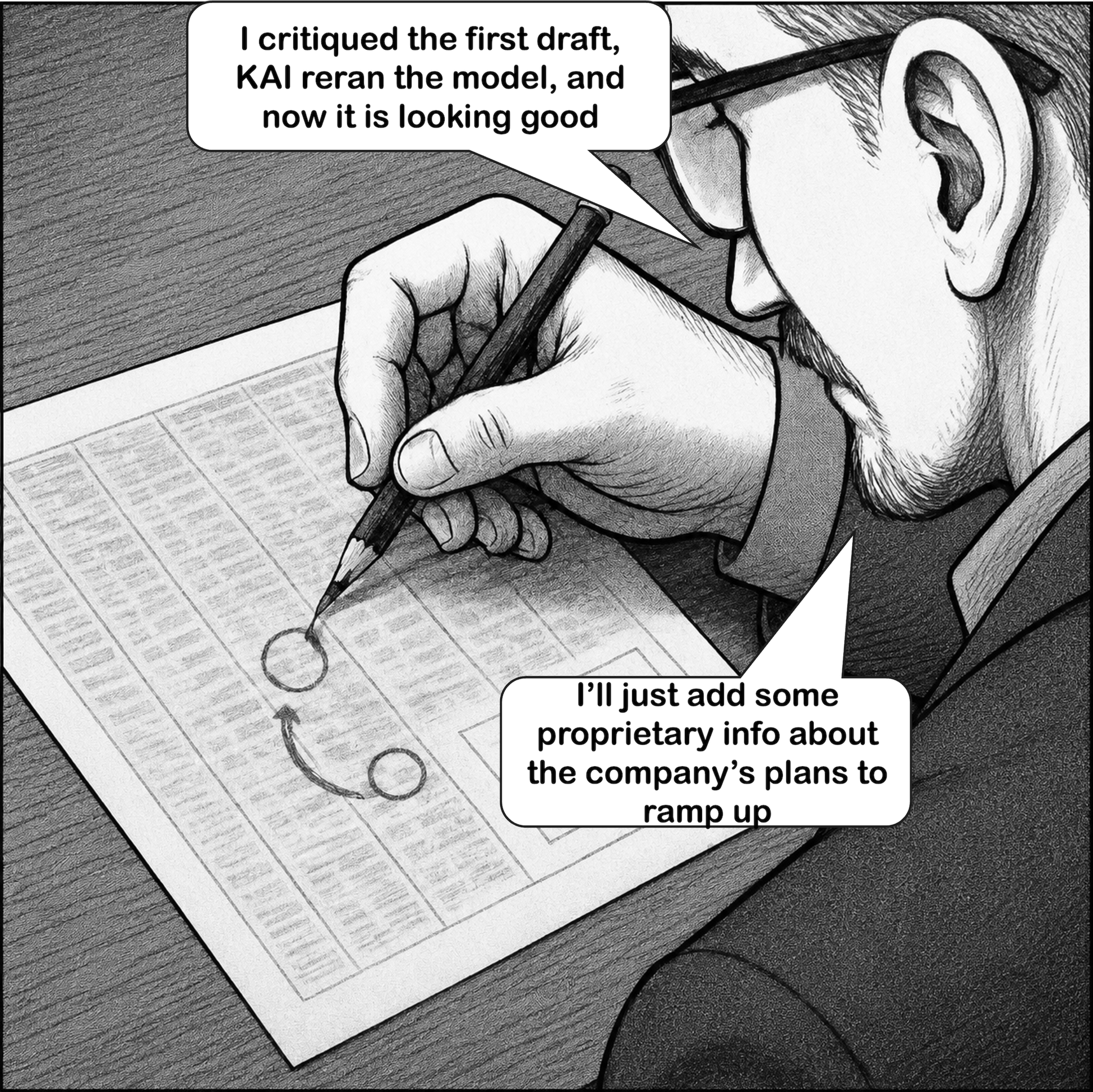
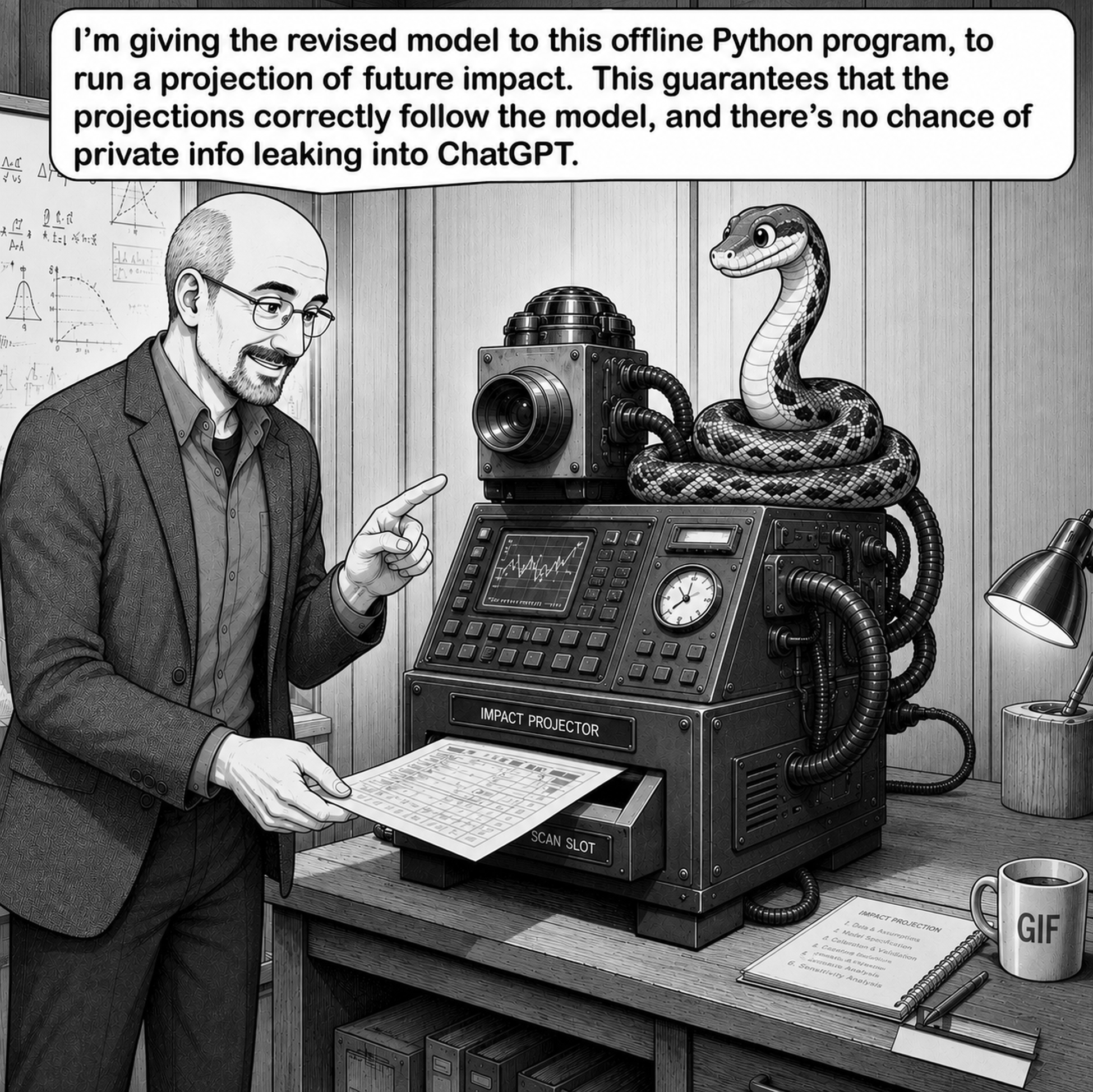
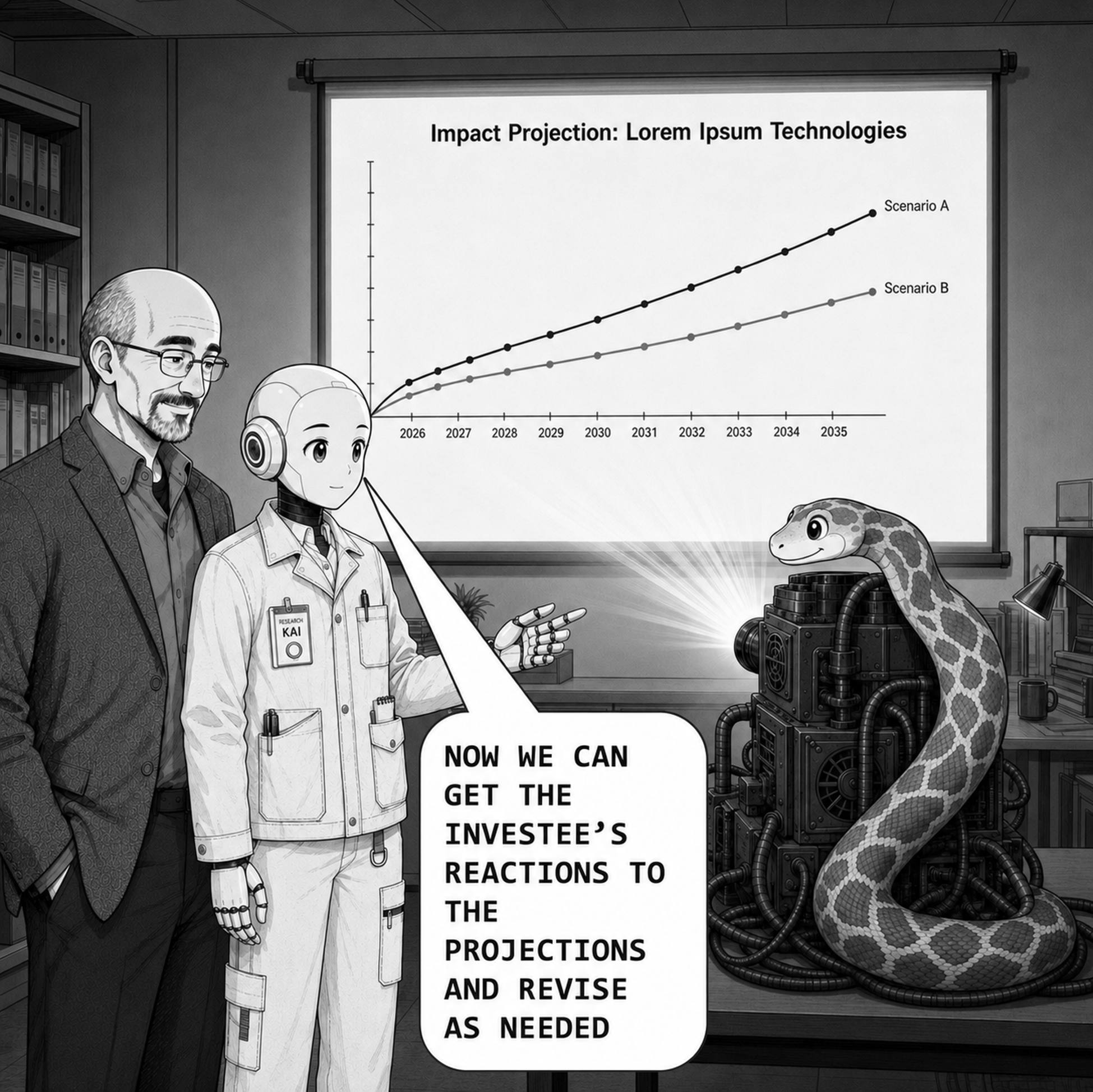
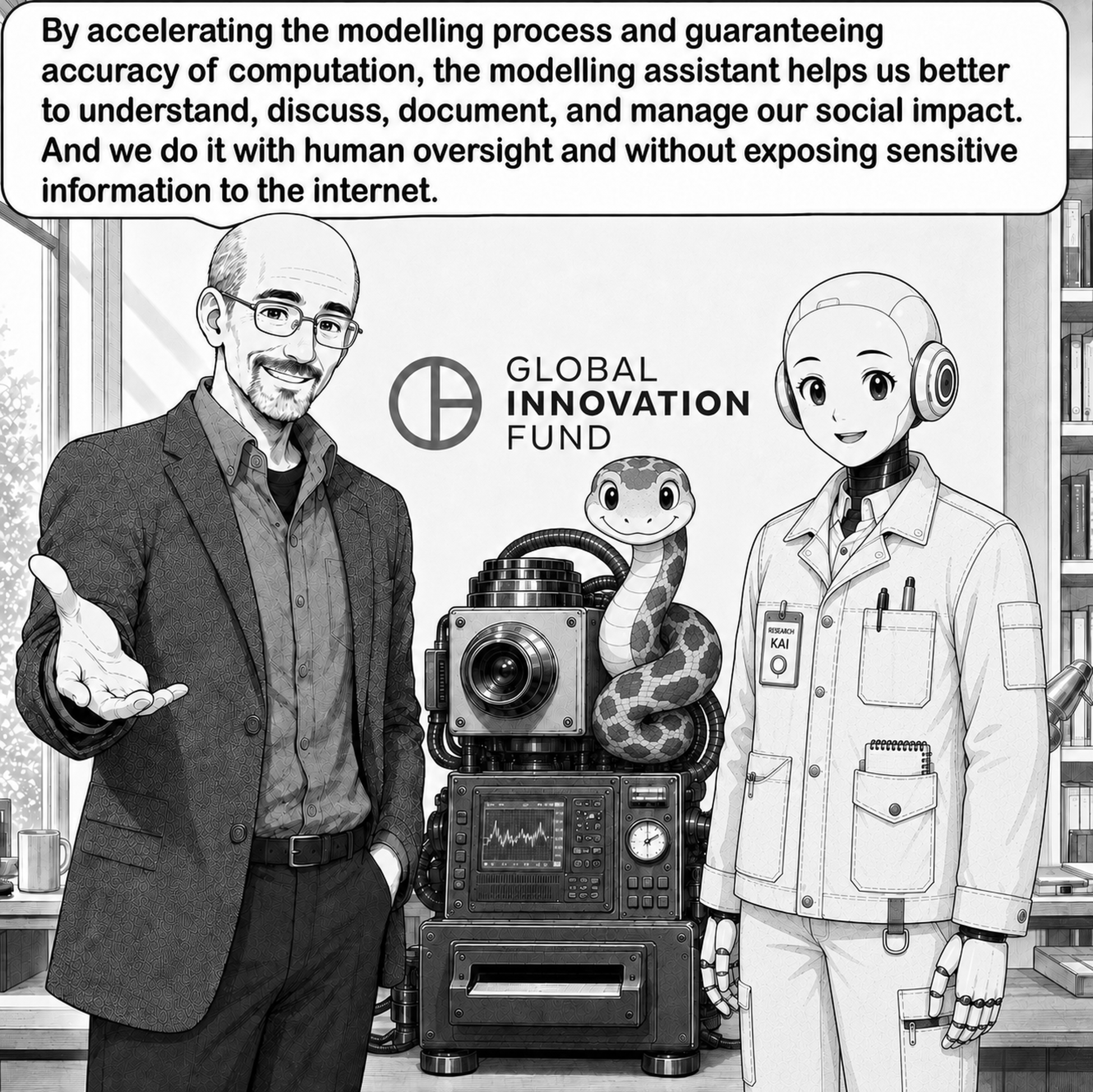
To sum up: the modelling assistant has two components. First the human analyst sketches a theory of change and uses an LLM for brainstorming, literature review and generating a precise model specification. This part of the process uses only publicly available information. The model specification can then be hand-edited to incorporate confidential information if necessary. Next, the specification is fed to an offline projection engine and dashboard. This allows easy visualisation of inputs, outputs, and outcomes, as well as sensitivity tests. Crucially, it includes clear documentation of model structure and of all assumptions and data sources.
At a moment when development and philanthropic budgets are under pressure, funders need sharper ways to understand the impact of what they are funding, at both investment and portfolio level. The AI-powered modeller could help by making GIF’s Practical Impact approach faster and easier to apply: clarifying assumptions, comparing expected impact across various channels, and showing where the evidence is strong, weak, or missing. For some, it could also be a practical tool for better allocation of scarce capital.
The GIF team is mapping out what this tool will look like, building on our previous impact modelling work. We welcome input from peers and potential partners who can help shape this with us. We will be sharing more updates as this work progresses.
The development of the AI modeller culminates my ten years of work on creating and implementing the Practical Impact (PI) framework at GIF. I am happy that PI has inspired similar efforts in CGIAR, IDinsight, and elsewhere. I hope the automated approach will make the framework even more accessible and useful.
As I bow out of GIF, I want to gratefully acknowledge Michael Eddy and Rachna Nag Chowdhuri, who made major contributions to PI, and express my gratitude to all my GIF colleagues for their encouragement, collegiality and support.