
Bringing finance and evidence to the poverty/agriculture/carbon nexus.
By Ken Chomitz
Dec 03, 2025
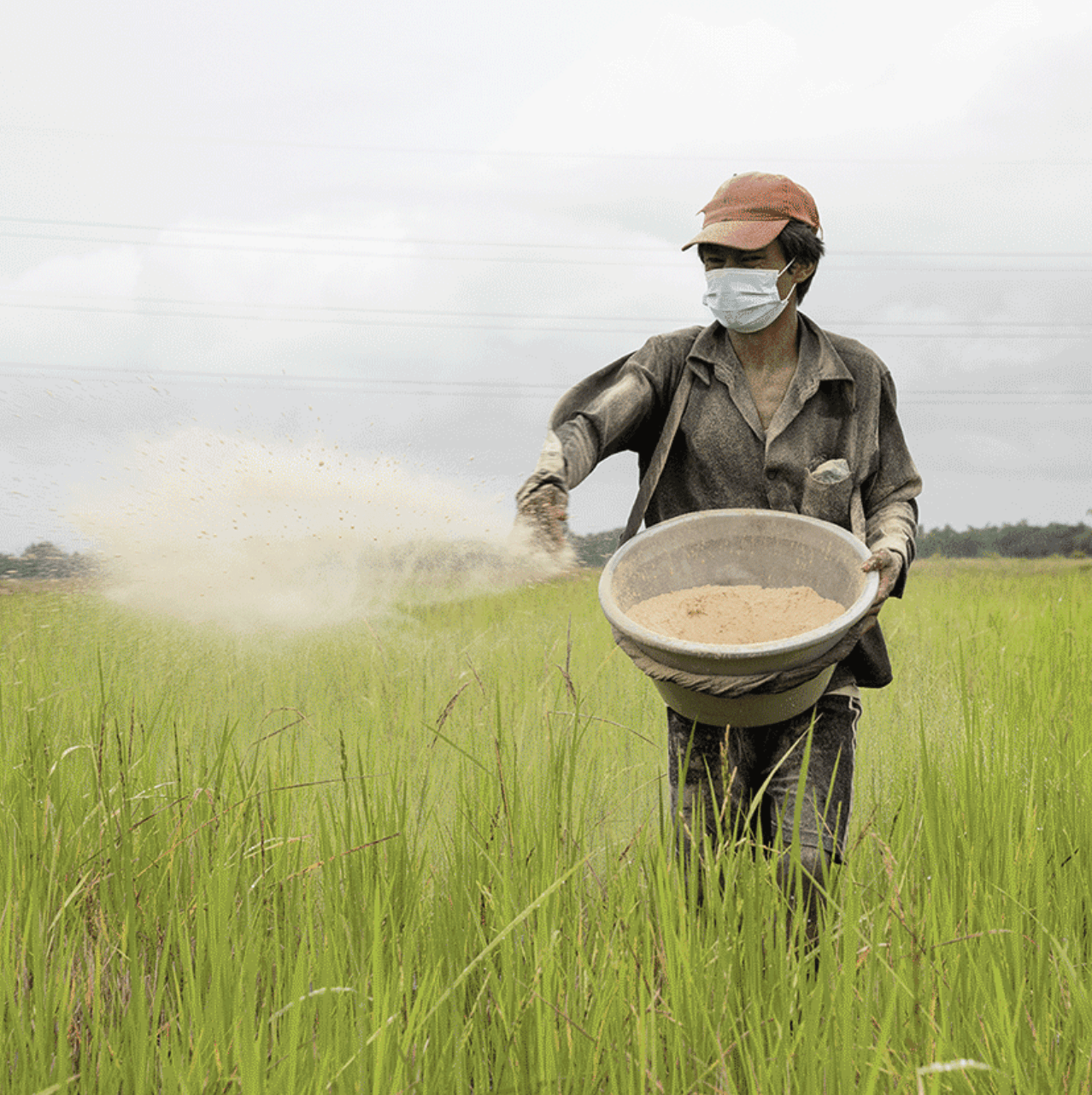
The Global Innovation Fund (GIF) is supporting a class of innovations that could lift hundreds of millions of people out of poverty, pull hundreds of millions of tons of CO2 out of the atmosphere, and ease pressure on hundreds of millions of hectares of forests and natural habitats. The key to this hope: healthier, carbon-rich soils on smallholder farms.
Consider this nexus of poverty, agriculture, and environment:
- Of the world’s 1.1 billion people living in acute multidimensional poverty, nearly a billion reside in rural areas (1).
- Most of the rural poor are directly or indirectly connected with the world’s half-billion (2) small farms, occupying 9 percent of the world’s agricultural area, or with grasslands where they manage livestock.
- In sub-Saharan Africa and South Asia, there is strong overlap between poverty and ‘yield gap’ – the shortfall between actual and potential harvest. African farms are typically producing less than half what is possible (3).
In sub-Saharan Africa, closing this yield gap, alongside complementary policy measures, could limit long-term habitat loss to just one percent compared with 14 percent under business-as-usual projections for 2050 (4).
Huge potential…
Evidence is mounting that boosting soil carbon addresses this poverty/environment nexus. It counteracts soil degradation, enhances resilience to drought and flood, and boosts yield. But where can farmers and herders find this carbon? It’s all around them! They can grab it from the atmosphere where, in the form of CO2, it is distorting the climate and wreaking havoc on their crops and livestock.
There are many techniques for putting atmospheric carbon to work in farms and fields, including regenerative farming, enhanced rock weathering (ERW), and rotational grazing. The potential is immense: the World Bank estimates that cost-effective opportunities for enhancing croplands and grasslands in developing countries could remove 1.375 billion tons of CO2 per year (5).
…but farmers and financiers face uncertainty
If soil carbon is so valuable, why aren’t more farmers adopting these techniques? This is because of uncertainty about risks and rewards, both for farmers and those who would finance them:
- Farmers may simply not know about available techniques or how to adapt them to their crops, climate and soil.
- They may be concerned about adopting a novel technique. What if the crop fails? Even if it succeeds, will the returns justify the investment?
- These techniques generally require upfront costs. Benefits may accrue slowly as the soil regenerates. How can farmers afford the costs of adoption?
Carbon project developers could help to overcome those barriers. Carbon credit revenue is one possible approach to provide farmers with added income, insurance, and capital finance. But project developers face their own barriers:
- Carbon projects are expensive to set up. Because this is so new, developers are unsure which approaches will be best suited for a given combination of crop, soil, and climate.
- These projects depend on close collaboration with farmers and herders. How can that relationship be managed, how can revenues be fairly and effectively shared with large numbers of smallholder farmers?
- Soil carbon measurement is expensive if carried out by current ground-based sampling methods, denting developer revenue and landholder benefits.
- Carbon markets want evidence of soil carbon credits’ integrity and durability.
Carbon isn’t the only source of finance for soil health and carbon. COP30 reaffirmed global plans for massive expansion of adaptation funding. It saw the announcement of the Resilient Agriculture Investment for Net-Zero Land Degradation initiative, with ambitious plans to raise public and private finance. And it placed adaptation-related agriculture among the key indicators for tracking success of the Global Goal on Adaptation.
To mobilise and deploy finance, the basic questions blocking adoption need urgent answers:
- Which solutions work best, where, for farmers and for carbon capture?
- What are the barriers to adopting those solutions?
- What’s the role for carbon credits in financing those solutions?
- Can soil carbon be cheaply and accurately measured?
- How is GIF tackling this agenda?
GIF is proud to support innovators who are tackling these questions, deploying a diverse set of solutions under varied conditions.
Boomitra has developed a revolutionary combination of remote sensing and AI to slash the cost of soil carbon monitoring. It is financing regenerative agriculture in East Africa and India and grassland restoration in several locations.
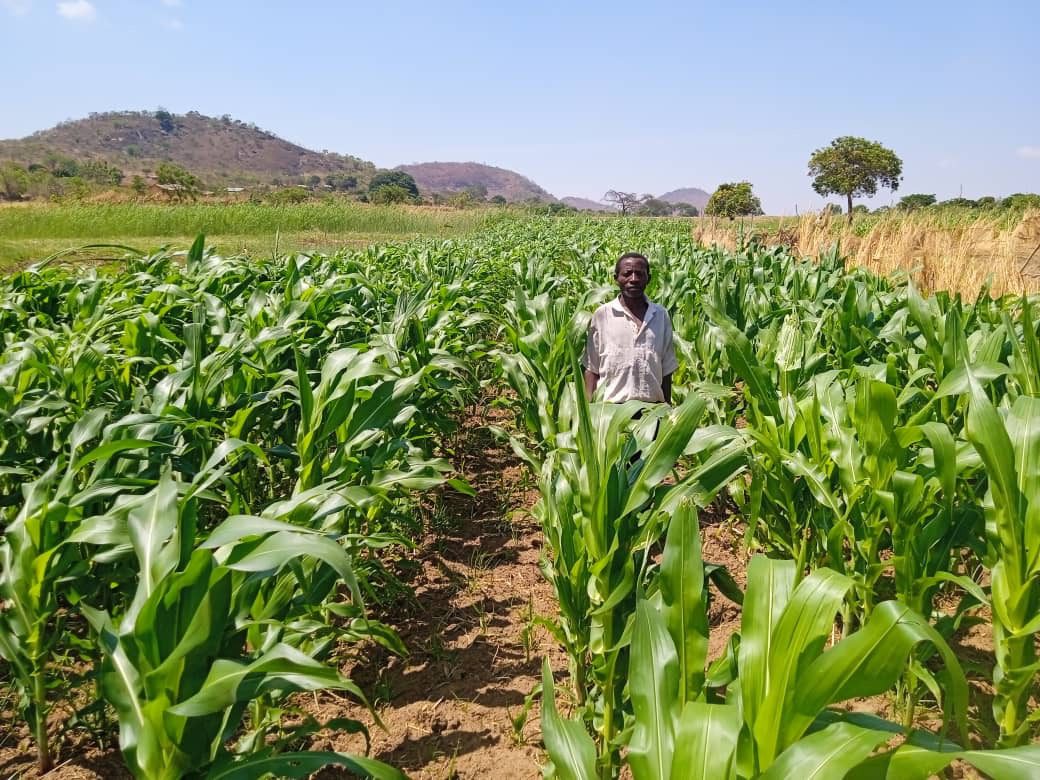
Mati Carbon is pioneering the use of ERW, which in effect lets farmers grow a ‘crop’ of carbon while enhancing their usual harvest, and does so in a way that locks the carbon up for millennia.
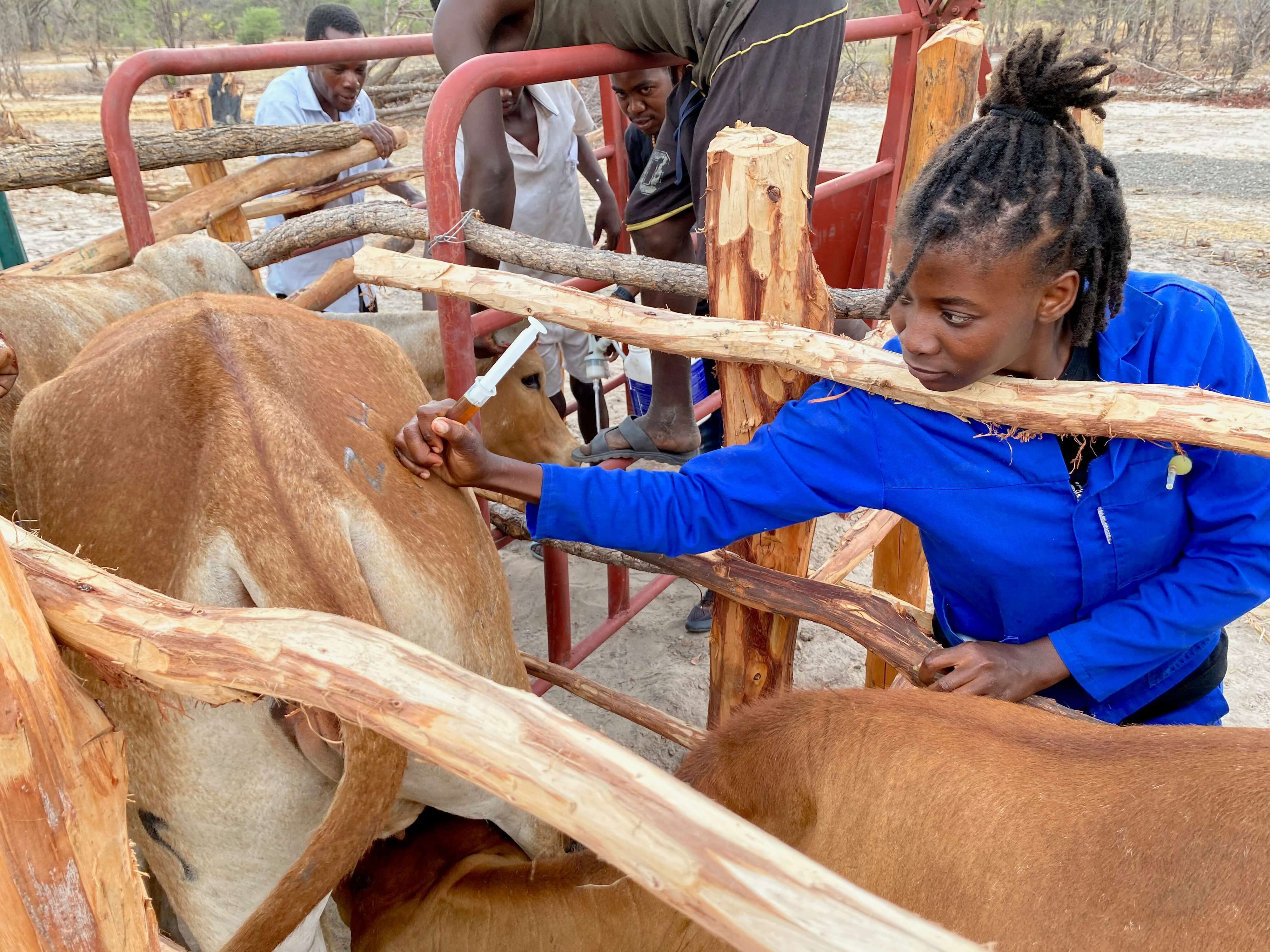
Mafisa helps Zambian farmers improve the health of their cattle and their rangelands through a holistic package of rotational grazing, fire prevention and veterinary care. The package is financed by credits from the carbon that accumulates as degraded rangeland recovers.
In addition to those three carbon-financed investments, GIF is supporting two innovations which likely have significant carbon co-benefits, offer rapid returns to farmers, and provide valuable environmental services.
Proximity Designs’ No-burn Rice-farming practice helps farmers keep nutrient-rich post-harvest crop residues in their fields instead of burning them and releasing lung-damaging air pollution.
Tiyeni’s Deep Bed Farming technique boosts soil health, increases farm resilience to drought and flood, and reduces erosion and downstream sedimentation.
There is tremendous potential for learning from each of these early-stage ventures as they optimise and scale their approaches. Pooled learning can generate national and global guidance on financing and harvesting the many dividends of healthy, carbon-rich soils.
Stay tuned to this blog for more on GIF’s soil health portfolio.
References
- United Nations. 2025. ‘2025 Global Multidimensional Poverty Index (MPI)’. In Human Development Reports. United Nations. https://hdr.undp.org/content/2025
- Lowder, S., Arslan, A., Cabrera Cevallos, C.E., O’Neill, M. & De La O Campos, A.P. 2025. A global update on the number of farms, farm size and farmland distribution – Background paper for The State of Food and Agriculture 2025. FAO Agricultural Development Economics Working Paper 25-14. Rome, FAO. https://doi.org/10.4060/cd7373e
- FAO. 2025. The State of Food and Agriculture 2025 – Addressing land degradation across landholding scales. Rome. https://doi.org/10.4060/cd7067en p. 37
- Williams, DR Clark, M, Buchanan, GM et al. 2021. Proactive conservation to prevent habitat losses to agricultural expansion . https://doi.org/10.1038/s41893-020-00656-5
- Sutton, William R., Alexander Lotsch, and Ashesh Prasann. 2024. Recipe for a Livable Planet: Achieving Net Zero Emissions in the Agrifood System. Agriculture and Food Series. Washington, DC: World Bank. doi:10.1596/978-1-4648-2093-9. License: Creative Commons Attribution CC BY 3.0 IGO, p. 236