

Powering innovation for impact: GIF and DSTI renew partnership to scale African innovations.
Jan 05, 2026
Bridging the gap between promising innovations and lasting impact is one of Africa's most pressing challenges. It's a challenge the Global Innovation Fund (GIF) and South Africa's Department of Science, Technology, and Innovation (DSTI) are tackling head-on through a renewed partnership announced last month.
The partnership, launched through a Letter of Intent at a side event during Science Forum South Africa (SFSA) 2025, builds on a collaboration first established in 2016. This next phase marks a deliberate shift towards jointly supporting high-impact, scalable innovations that address regional priorities, combining DSTI's deep regional understanding and policy leadership with GIF's track record in evidence-based investment and scaling.
The announcement came at an apt moment. SFSA 2025 marked ten years since the Forum was first convened, and this year's theme, "Placing Science, Technology and Innovation at the Centre of Government, Education, Industry and Society", captured the very ambition that underpins the GIF-DSTI collaboration.
The challenge: From pilot to scale
In his keynote address, GIF CEO Joseph Ssentongo framed the urgency: Across Africa, communities face interconnected challenges from climate change and food insecurity to health inequities and limited economic opportunity. Yet a striking disparity persists: Africa is home to 17% of the world's population but accounts for less than 1% of global R&D expenditure and patents.
This underinvestment, Joseph argued, contributes to the "valley of death" where promising ideas emerge but struggle to scale.
"People often say we are 'compressing a century into a decade,'" he observed. "It is usually said about AI, but it reflects the broader acceleration we're witnessing across science, technology, and development. The question is how we harness this momentum, together, to tackle Africa's most persistent challenges."
Yet there is no shortage of innovation on the continent. Joseph pointed to GIF's portfolio of 44 innovations in sub-Saharan Africa alone and the fact that these innovations succeed because they are grounded in local knowledge and shaped by local realities.
"For science, technology, and innovation to transform lives, they must be developed with the communities they aim to serve," Joseph said. "And that requires an enabling ecosystem. Ingenuity alone is not enough. Scalable innovation needs appropriate finance, predictable policy environments, and partnerships that help promising pilots grow into durable solutions."
Strengthening the ecosystem: the GIF-DSTI partnership
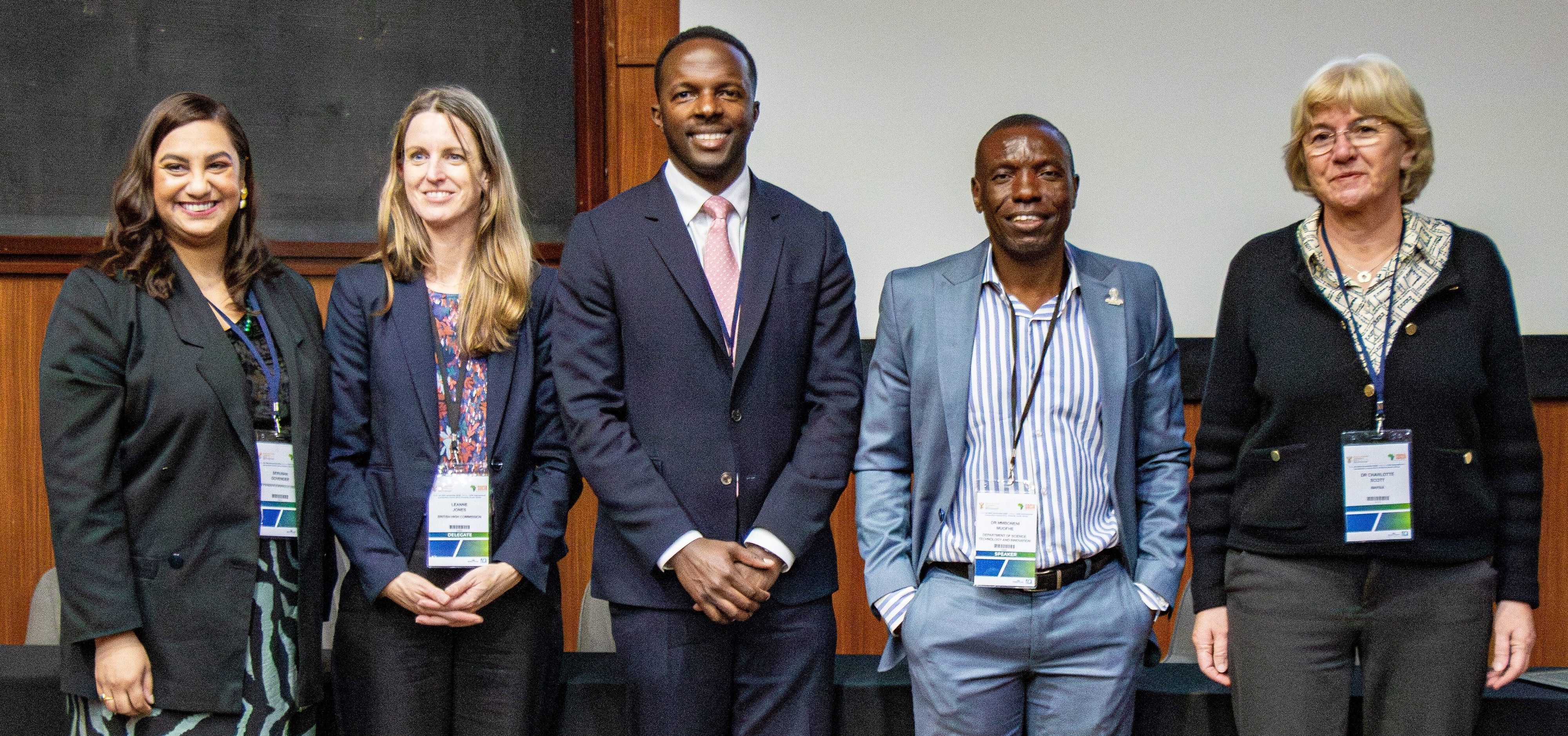
At the side event, "Powering Innovation for Impact", GIF and DSTI officially renewed their partnership. The dialogue focused on a shared goal: moving beyond individual grants to create a system where African innovators have the policy support and resources to thrive at scale. Key insights from the panel of experts included:
- A unified vision: Dr Mmboneni Muofhe, Deputy Director-General for Socio-Economic Innovation Partnerships, DSTI, reinforced that driving system-level changes requires deep coordination between partners. She set out the shared vision: building systems where African innovators have the resources, evidence, and policy support they need to scale and thrive.
- A shift to systems changes: Leanne Jones, Africa Science and Research Lead, FCDO, highlighted a strategic shift from supporting individual innovations to systematic interventions, focusing on institutional capacity, policy environments, and regional coordination
- An innovator’s perspective: Dr Charlotte Scott, CEO, Mafisa, shared how strengthening Zambia’s livestock sector requires a delicate balance between commercial viability, political interests and community needs.
Alignment with continental priorities
The partnership comes at a pivotal moment for African science and innovation policy. The African Union's Science, Technology and Innovation Strategy for Africa (STISA 2034), which featured prominently in discussions throughout SFSA 2025, emphasises that no meaningful socio-economic development is attainable without science, technology and innovation (STI).
The strategy identifies five priority sectors: agriculture, health, ICT, energy, and environment, areas where GIF has an established track record. Critically, STISA 2034 recognises the same challenge that Joseph highlighted: the need to bridge the gap between promising innovations and sustainable scale. Among its six strategic priorities, the strategy calls for strengthening science diplomacy and partnerships, precisely the kind of collaboration the GIF-DSTI partnership represents.
Looking ahead
The Forum itself offered a snapshot of the continent's STI ambitions. Held under South Africa's flagship public science event, SFSA 2025 brought together scientists, policymakers, and civil society across more than 38 side events and 91 high-level panel discussions covering everything from science diplomacy and inclusive innovation to disruptive technologies and science journalism.
For GIF and DSTI, the renewed partnership represents a commitment to moving beyond individual investments towards shaping the broader ecosystem. As Dr Mbonneni’s key note concluded: "Together, we can help build an ecosystem where African innovators have the resources, evidence, partnerships, and policy support they need to scale and thrive. By doing so, we ensure that science and technology serve their highest purpose: to improve lives, unlock potential, and expand opportunities for the people who need it most."
GIF welcomes partners and investors who share this vision to connect with us, so that the growing investment flowing into Africa delivers its greatest possible impact.