

Investing in blue carbon and improved livelihoods through mangrove restoration in Indonesia.
Jan 06, 2026
The Global Innovation Fund (GIF) is investing in BlueYou to scale a solution in Indonesia, Integrated Mangrove Aquaculture (IMA), that delivers triple climate adaptation dividends: restoring coastal ecosystems that buffer communities against climate shocks, generating economic benefits for smallholder shrimp farmers through improved pond biodiversity and increased incomes, and creating environmental co-benefits, including carbon sequestration.
Indonesia is home to a quarter of the world’s mangroves. Historically, they covered 3.5 million hectares, but over 1.5 million hectares have been cleared, mostly to create shrimp ponds that support rural livelihoods. Smallholder farmers expanded ponds by removing mangroves, but without mangrove roots to naturally filter water, pond conditions have deteriorated. Pollution, disease, and declining yields have left many ponds degraded or abandoned, trapping farmers in low-income, unsustainable systems. Meanwhile, the loss of mangroves has made coastal communities more vulnerable to rising seas, erosion, and storm surges.
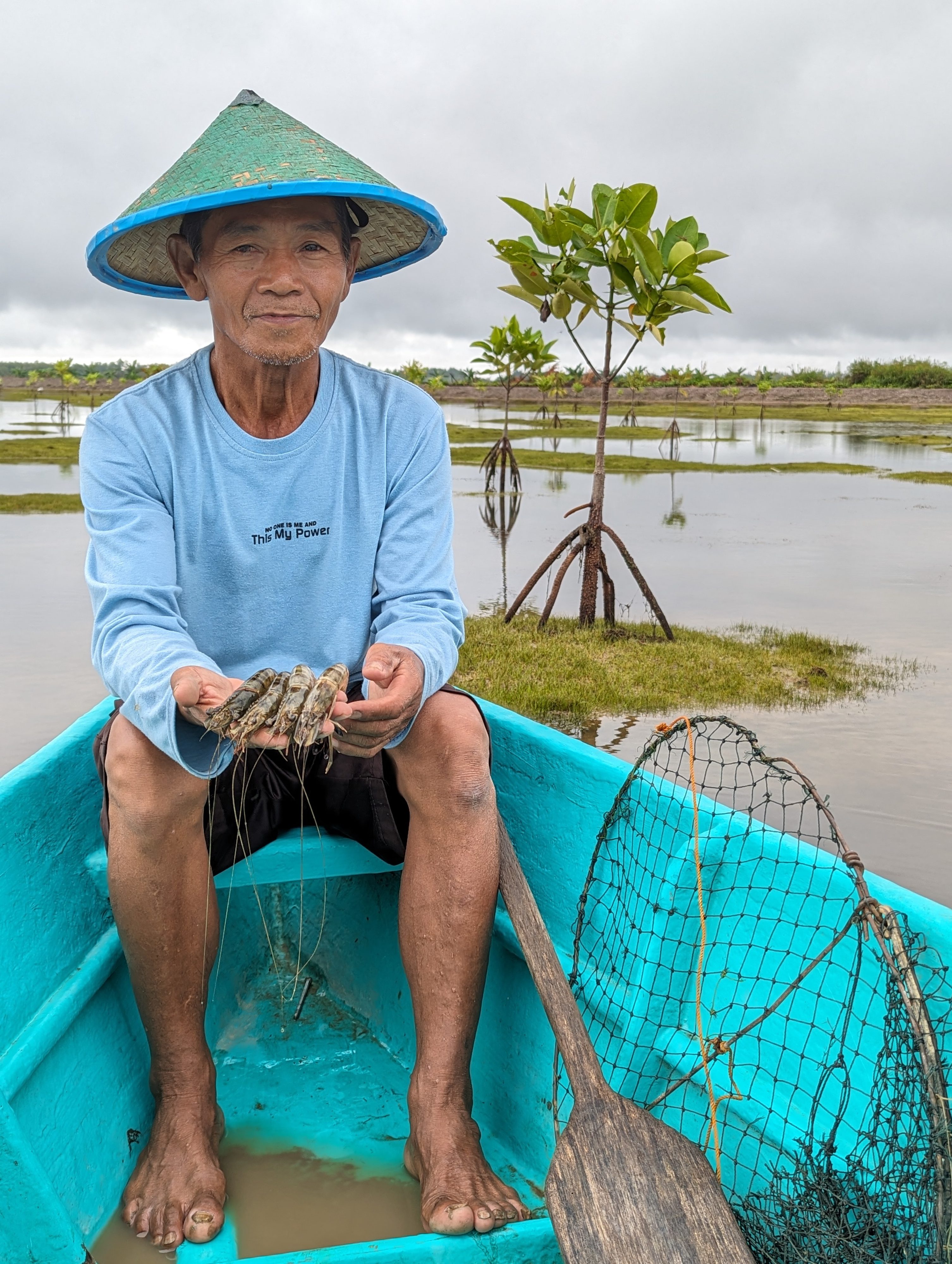
To tackle these challenges, BlueYou is working with farmers to restore the mangroves within active aquaculture ponds to deliver healthy and high quality shrimp. This regenerative, nature-based approach combines mangrove restoration with traditional polyculture, allowing farmers to raise shrimp or fish alongside mangroves in the same ponds, restoring nature while producing high quality seafood. The mangrove roots naturally filter the water, support young fish, crabs and shrimp, and rebuild the food systems farmers rely on. This enables farmers to sustain high-quality seafood production while restoring coastal ecosystems.
GIF Investment Director, Shreya Das, said:
“BlueYou’s model shows that coastal restoration and economic opportunity can go hand-in-hand. By restoring mangroves within existing shrimp ponds, farmers are improving their productivity, strengthening climate resilience, and rebuilding ecosystems that protect their communities. We’re excited by the potential for this approach to scale across Indonesia and open new opportunities in blue carbon that can further improve livelihoods and support nature.”
René Benguerel, Co-Founder and CEO of BlueYou said:
"I am extremely happy and look forward to the partnership with the Global Innovation Fund. The restorative mangrove aquaculture program is a key pillar of Blueyou's global mission to promote regenerative, climate-smart practices in the blue food sector. The mangrove restoration project in Tarakan / Kalimantan is the cornerstone of this strategy, which can potentially unlock significant potential for scale across the Asian region.”
Jonas Walker, Restorative Aquaculture Program Director at BlueYou said:
"We initiated the restorative mangrove aquaculture program in Tarakan seven years ago. Today, we have the proof of concept and a successful track record with participating farmers at the pilot stage. Collaborating with the Global Innovation Fund will allow us to solve the remaining bottlenecks to scale, creating a blueprint for restorative mangrove aquaculture across Indonesia!"
BlueYou rolled out IMA in Vietnam in 2008 and expanded to Indonesia in 2020, supporting more than 3,500 farmers and restoring 12,500 hectares of mangroves. In Indonesia, early adopters of IMA are seeing yield increases of over 60 percent and a doubling of incomes. In Vietnam, where the model is fully established, harvests have grown by over 180 percent and incomes have nearly quadrupled, demonstrating the long-term economic and environmental benefits of IMA.
GIF’s investment will help BlueYou scale IMA across Indonesia while generating rigorous evidence on its impacts on carbon capture, biodiversity, and livelihoods. It will also support BlueYou’s entry into blue carbon markets, enabling carbon finance to drive mangrove restoration and wider expansion of IMA. The long-term aim is to establish a scalable model that government agencies, NGOs, and local partners can deploy across South and Southeast Asia. With an estimated one million hectares of degraded ponds suitable for restoration, the potential for impact and climate resilience is substantial.