
AI Diagnostics
Location
South Africa
Sector
Public health
Type of investment
Risk capital
Project stage
Pilot
Length of investment
2026+
Website
Investment overview
AI Diagnostics is a South African MedTech company that has built an easy-to-use AI-powered digital stethoscope for early detection of tuberculosis using lung sounds.
The development challenge
Tuberculosis remains one of the world’s deadliest infectious diseases, with over 10 million new cases and 1.3 million deaths each year, despite being both preventable and curable. South Africa is at the epicentre of this crisis, with one of the highest incidence rates per capita in the world, where it remains a leading cause of death.
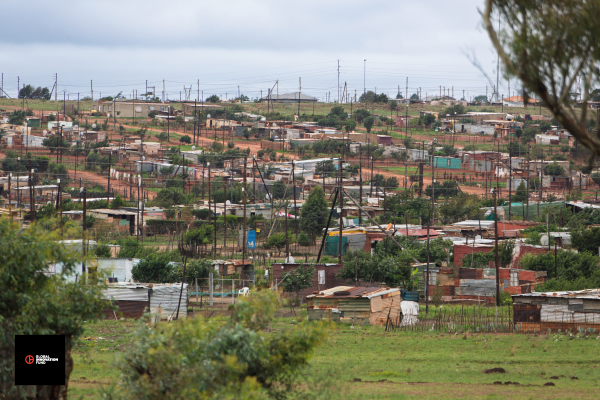
Weak health systems, poverty, limited access to screening and treatment, and climate-related disruptions all delay diagnosis and care, allowing tuberculosis to spread. Today, about 22% of people with tuberculosis are never diagnosed, significantly increasing the chance of death. Many are diagnosed only after the disease has progressed, fuelling community transmission and millions of new cases annually.

The innovation
AI Diagnostics has created a simple, fast way to screen people for tuberculosis using a portable digital stethoscope app and AI model. A health worker records a patient’s breathing, and the AI model listens to the lung sounds and flags possible tuberculosis in less than three minutes.
The tool is used as an early screening tool to identify people who should receive full confirmatory testing, operable in even the most ill-equipped and remote places. This helps find cases sooner and get patients onto treatment faster, reducing death, suffering and transmission.

Our investment
GIF has invested $300,000 in AI Diagnostics as part of the company’s pre-Series A round.
The funding will be used to scale in the South African market with key partners and build new partnerships across Sub Saharan Africa and Asia.

AI Diagnostics in numbers
reduction in missed TB-positive patients
more efficient than symptomatic screening
validated lung recordings to train the model